
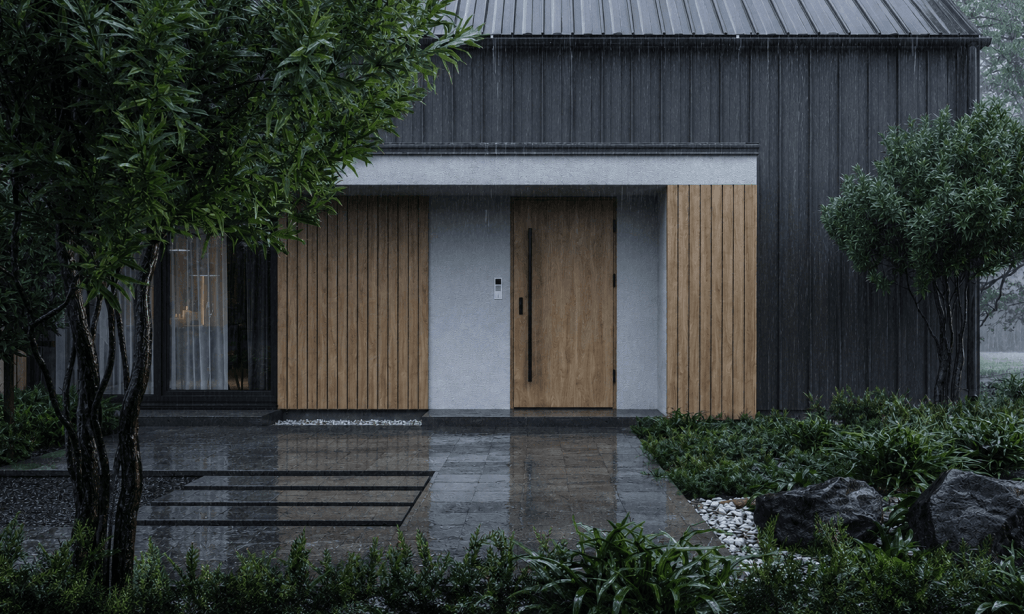
Get your doors monsoon ready 4-6 weeks before the first rainfall. Check for any gaps, seal in exposed edges, tighten all hinges, replace weather stripping and add a seal at the bottom. Wesmarc offers engineered wood CPL veneer doors that are designed for Indian weather conditions for use in modern homes unlike painted or polished doors.
Monsoon season in India is not far and with it comes several challenges like presence of humidity and moisture in air to heavy rainfall. Certain states in India receive up to 600–3,000mm of annual rainfall keeping the moisture in air high. This places a heavy stress on doors located in entrances, kitchens, and bathrooms resulting in swelling, sticking, peeling of finishes, and alignment issues. With proper wooden door monsoon care, the lifespan of doors can be enhanced while also minimizing instances of seasonal repairs. With a periodic maintenance routine, operational problems can be prevented.
Why Wooden Doors Swell in Monsoon – The Science
Solid wood absorbs moisture causing doors to swell up to 2–8mm per metre read the complete guide on how to prevent moisture damage in wooden doors for long-term solutions. This makes the doors bind against frames. On the contrary, Engineered wood CPL veneer doors from reputed brands like Wesmarc are resistant to moisture given their layered construction improves dimensional stability.
The CPL-sealed surfaces help create a protective outer layer which not only prevents ingress of moisture, but also ensures long-term performance in monsoon.
Which Doors Are Most at Risk?
The location of doors in a home also plays a significant role in its upkeep. Here is a short table that determines where a door is at risk.
| Door Location | Risk Level |
| Main entrance door | High |
| Kitchen door | High |
| Bathroom-adjacent door | High |
| Bedroom door | Medium |
| Interior corridor door | Low |
Doors that are exposed to the external environment require utmost attention before onset of monsoon.
Pre-Monsoon Door Checklist – 10 Steps
Doors, especially ones located facing an external environment are constantly exposed to presence of moisture along with fluctuation in temperature and weather conditions resulting in different issues. Following a simple inspection routine before monsoon comes in minimizes swelling, sticking, peeling of finishes, rusting of hardware, keeping long-term structural damage risk low. Follow this simple checklist to ensure doors function well all through the season.
- Keep close to 3–5mm operational gap around the door to ensure smooth movement even if the doors expand due to moisture.
- Make sure to inspect all four edges for exposed wood or unfinished surfaces.
- Assess alignment and check for any issues like peeling of finishes.
- Tighten as well as lubricate all hinge screws as well as hardware fittings.
- Evaluate bottom door seal for wear, cracks, or moisture damage.
- Reapply sealant wherever any gap or deterioration is visible.
- Replace damaged or worn-out weather stripping.
- Repair peeling paint, laminate, or exposed PU-coated surfaces immediately.
- Keep the room ventilated to minimize build-up of humidity around doors.
Factory fitted engineered wood doors with CPL finish are designed to withstand any monsoon effects. Yet following these simple pre-monsoon door checklists India enables homeowners to take care of their doors during the monsoon months.
Door Sealing for Monsoon – Products & Methods
Effective door sealing for monsoon protection focuses on three areas.
Bottom Seal:
It is recommended to go for automatic drop seals at entrance doors and go for brush sweeps and PVC seals in interior spaces.
Edge Seal
PUR edge banding enhances resistance to presence of moisture as it protects exposed edges from humidity ingress.
Surface Seal:
CPL-finished, factory fitted engineered wood doors require minimal seasonal preparation — here’s how to maintain CPL veneer doors year-round for best performance.
Wooden Door Swelling Prevention – Long-Term Upgrades
Prevention of wooden door swelling in monsoon depends on the type of door system chosen. Going for engineered wood doors with CPL finishes and PUR-sealed edges is better in comparison to solid wood doors. Additionally, it is recommended to go for rebated door systems that provide enhanced sealing effect by preventing ingress of moisture through gaps in the frame.
Signs Your Door Has Already Taken Monsoon Damage
Here are few signs that indicate signs of possible damage in your door:
- Door sticking during operation
- Swelling at edges or corners
- Bubbling paint or peeling finish
- Uneven gaps around the frame
- Hinges loosening from the frame
- Dark stains near the bottom rail
It is possible to repair any minor issues like swelling with processes like resealing and alignment. Severe warping or delamination may require replacement. However, with use of factory fitted engineered wood doors that are manufactured under controlled pressure and temperature these issues are avoided requiring no repairs and replacements.
Following different door care steps before and during monsoon helps retain the health of a solid wood door. However, it is recommended to choose performance-grade engineered wood door systems with CPL surfaces, PUR-sealed edges, and stable core construction from reputed brands like Wesmarc for long term dimensional stability and reliability across all seasons. These doors are designed to be resistant to moisture, temperature and weather fluctuations, harsh UV rays and are durable, ensuring instances of repairs and replacements are almost zero.

