
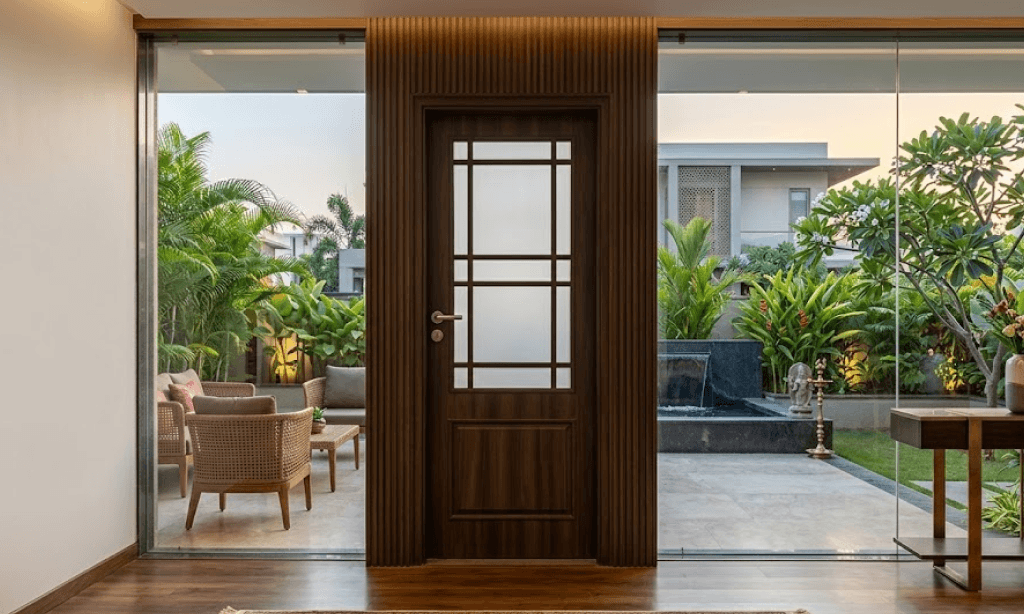
Japandi door designs are becoming a popular style of doors that are considered by several modern homeowners who prefer simplicity and clean lines. These doors are designed to provide a balance between Japanese simplicity with Scandinavian warmth. A Japandi door design with engineered wood construction features subtle panel detailing, replicate wood tones, concealed hardware, and seamless finishes that help create clutter-free interiors. These doors are commonly finished in light oak, walnut textures and soft matte surfaces, offering a calm and minimal zen aesthetic while ensuring better stability and durability.
What Is Japandi Design? — The Philosophy Behind the Trend
Japandi door design is becoming one of the popular door designs in 2026 given the balance it provides of beauty and functionality. The concept merges Japanese minimalism with Scandinavian comfort thereby providing interiors that feel warm, appear visually calm and are functional in nature. Japandi spaces depend on natural materials, muted palette combinations and artistic craftsmanship.
The design philosophy also suits modern Indian homeowners given the preference for clutter-free layouts and efficient space planning. A Japanese style door comes with a sleek engineered wood profile and natural wood-textured finish, making interiors appear more spacious, warm, and soothing.
A Japandi door trend is heavily inspired by the wabi-sabi — the Japanese concept of appreciating simplicity and natural imperfections and this is why the Japandi door designs are crafted using subtle wood grains, understated textures, and seamless finishes and not decorative carvings or bold metallic accents.
Wesmarc’s modern door systems are crafted in line with this philosophy. With precision installations, concealed fittings, and matching frames that create visual continuity across interiors, the doors offered by the brand are designed to be long-lasting and durable, while staying visually sophisticated even if they are made for minimalist living.
Key Elements of Japandi Door Design
A true Japandi door design is meant to stay subtly sophisticated, where every detail contributes to a calm and harmonious environment.
Handle less or Minimal Hardware
Japandi doors come with push-open systems or slim lever handles. They also come with concealed hardware that helps maintain uninterrupted surfaces, providing a sleek appearance.
Natural Wood Finishes
Japandi interiors come in textures of natural oak, ash, walnut, and birch tones dominate Japandi interiors. Even in finishes, matte and oil-finished textures are preferred given they emphasise the authentic grain of the wood with a soft visual effect.
Flush Panels and Clean Geometry
Japandi doors are known for their clean line door design. With the construction that has no heavy mouldings, visual continuity is maintained to minimize clutter. Certain designs may also include subtle vertical grooves for added texture without overwhelming the space.
Muted Earthy Palette
Warm beige, soft walnut, light grey, cream, and natural whites are colours popularly preferred in modern minimalist door trends and bland well with wooden flooring, textured walls, and soft lighting.
Seamless Integration
Modern Japandi interiors consider the doors to be an extension of the wall, and this is where Wesmarc’s Full Wall Wrap Adjustable Frame systems fit in providing a seamless appearance.
Top 5 Japandi Door Designs for Indian Homes
Here are some popular Japandi door design ideas suited for modern Indian interiors:
| Design | Material | Colour Tone | Best Room |
| Flat Laminated Veneer/TDF Finish | Engineered wood + Veneer | Natural walnut / White ash | Bedroom |
| Vertical groove line panel | MDF + veneer | Light walnut / Natural walnut | Living-dining partition |
| Handle less push door | Engineered wood | White oak | Walk-in closet |
| Frosted glass + wood frame | Wood + glass | Grain textured + matte | Study/office |
Frosted glass doors are commonly preferred as they allow light to pass in without affecting privacy working beautifully within a Scandinavian door interior concept.
Comparison: Japandi Style Door Vs Industrial Style Door
| Feature | Japandi | Industrial |
| Colour Palette | Warm neutrals, beige, cream | Dark grey, black, Amberlux rose wood |
| Hardware | Concealed/minimal | Exposed metal, iron |
| Material Feel | Engineered wood | Raw metal, reclaimed wood |
| Mood | Calm, zen, warm | Edgy, bold, urban |
| Best For | Apartments, family homes | Lofts, bachelor pads, cafes |
Industrial styles that focus on exposed textures and darker finishes, whereas Japandi interiors are known for a softer, more welcoming environment.
So, what is a Japandi Style Door and how to achieve it?
A Japandi door is designed by blending the concepts of Japanese minimalism with Scandinavian warmth. The door designs typically include engineered wood panels, wood finishes, concealed hardware, and muted earthy tones to provide a simple, clean, calm look. Wesmarc offers matte-finish CPL veneer doors with engineered constructions to achieve the Japandi-inspired Indian interiors beautifully.

