
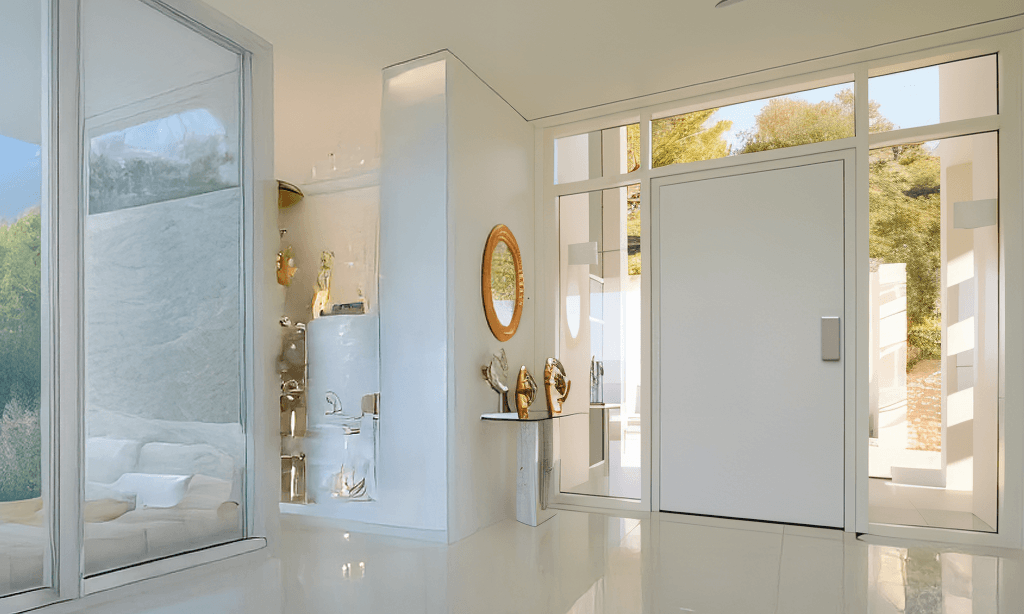
Doors are used not just to separate the external and internal spaces, but also play an important role in defining privacy of a space while speaking volumes about the interior space, the theme and personality of ones living in. When it comes to interior design in today’s times, one common point of discussion is the handleless door. Let us see here what these handleless doors are, its durability, usability, and long-term performance especially in Indian homes.
At Wesmarc Doors, we have always focussed on offering complete door systems that includes door leaf, frame, hardware and are installed together seamlessly without isolating each of the elements.
Understanding the Appeal of Handleless Doors
A door without handle design is often believed to be clean in visual appeal with minimal obtrusions. The surface of the door appears uninterrupted, often blending well with contemporary interior décor themes looking for subtle detailing.
Handleless doors are ideal when evaluated from design aspect in following areas:
- The passage at a home where locking isn’t needed
- Spaces where visual continuity is needed
- Interior designs focussing on flush finishes and concealed detailing
Handleless doors work on push mechanisms, concealed pulls, or magnetic systems without the need for handleless door lock, especially in areas where free access is allowed.
Where Handleless Doors Work Well
A handleless door works well where door usage is limited. They are ideal for use in:
- Internal partitions where locking isn’t needed
- Passage doors
As there are no handles, the installation of such doors must be precise with no faltering in accuracy. This is where flush fit frame installation, rebated door leaf profiles, and concealed hardware integration play a crucial role to make sure the door functioning isn’t affected.
Limitations of Handleless Door Designs in Indian Homes
An interior door without handle design may look elegant making the space appear stylish and modern, it does have its own practical limitations, especially when it comes to homes with children and elderly around who can open and close the doors several times in a day.
1. Daily usability challenges
With no proper grip, the doors when opened and closed frequently can feel difficult to handle for children and elderly users.
2. Limited locking functionality
A handleless door lock system is often absent or is minimal in certain doors making it difficult to use them in bedrooms, bathrooms, or main doors where one needs privacy and security.
3. Dependence on precision installation
A handleless door must be aligned well with components like adjustable architraves, concealed hinges (2E / 3E), flush striker plates to ensure they work efficiently without compromising on alignment and performance.
4. Maintenance sensitivity
Push-to-open or magnetic systems would need to be frequently adjusted, especially in areas with high humidity or where the usage is heavy.
Why Doors with Handles Continue to Perform Better
Doors with handles are designed to perform well without any challenges over a long period of time. These doors are designed to ensure smooth operation without compromising on safety and durability and bled well with
- EN-rated heavy-duty mortise locks
- 6-pin security euro cylinders
- Reinforced striker plates
- Adjustable hinge systems
Doors with handles benefits us as they:
- Provide better grip and control
- Are easy to operate by anyone, be it kids or seniors
- Is compatible with advanced locking systems
Wesmarc offers doors with handles that come with features like co-extruded acoustic seals, moisture-resistant bonding (PUR glue), and CPL veneer finishes that enhance the overall performance of a door.
Choosing between a handleless door and a conventional door with handles is not just about considering visual appeal or the current trends, but about looking for a door that balances functionality, performance, durability with visual appeal.One can opt for handle-less doors in non-critical areas where safety and privacy are not a concern, while choosing handle doors for bedrooms, bathrooms, and entrances an important distinction when considering solid core vs. tubular core door types.
Modern homes today are moving towards seamless design, but not at the cost of functionality. The idea is to create harmony between aesthetics and usability—where every door works as expected, every day.
At Wesmarc Doors, we understand the importance of blending aesthetics with usability, and provide complete door systems that are factory made with controlled precision to ensure long term smooth functioning while staying visually appealing.
Frequently Asked Questions
1. Are handleless doors suitable for main doors?
No, they are generally not recommended for main doors as they lack robust locking systems and ease of operation required for high-usage entry points.
2. Can a handleless door have a proper locking system?
A handleless door lock can be integrated in limited ways, but it does not offer the same reliability and security as traditional mortise lock systems.
3. Where should I use an interior door without a handle design?
An interior door without handle design works best for passage areas, utility spaces, or locations where locking is not necessary.
4. Are handleless doors difficult to maintain?
They can require more maintenance due to reliance on push mechanisms or magnetic systems, especially in humid or high-use environments.
5. Which is better for long-term use in Indian homes?
Doors with handles are generally better for long-term use due to their durability, ease of operation, and compatibility with secure locking systems.

