
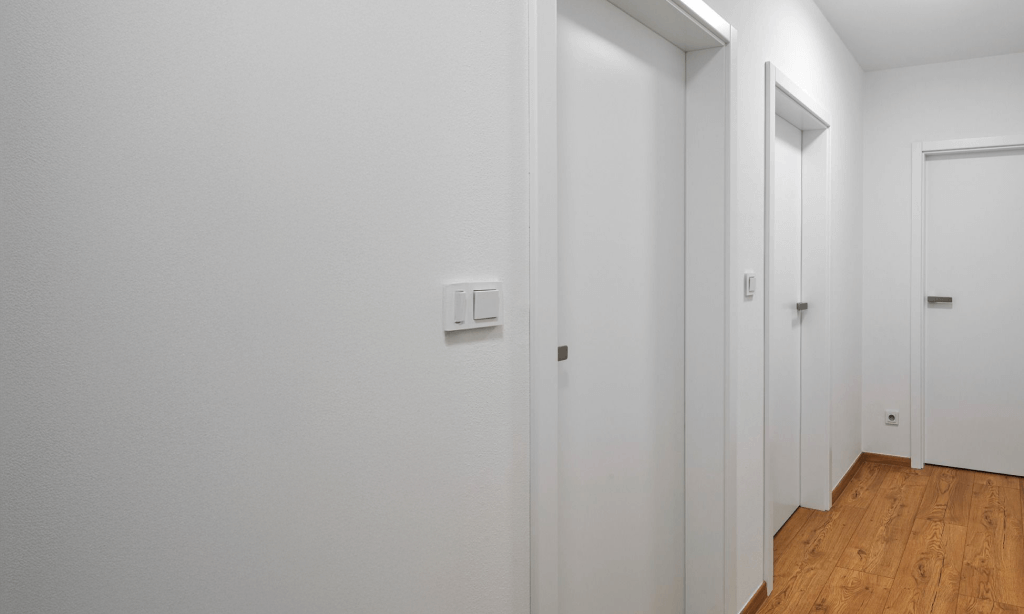
The right door for a home isn’t just about one that is merely visually appealing or just functionally apt, but is the one that is durable, robust, providing desired safety with long term performance. When exploring wooden door for a home, most buyers tend to compare factory-made doors with carpenter-made doors observing differences between both in terms of visual appeal, cost, accuracy in construction with ease of installation to the overall performance. Let us compare both types of doors to help make the right choice, especially when it comes to the main or interior wood door.
Consistency in Material and Construction
Factory-made doors are manufactured using premium quality engineered wood, reinforced core structures, and calibrated manufacturing processes. The process as well as the materials used provide doors that come with uniform thickness, equal even load distribution with long lasting performance across every door. With controlled manufacturing factory environment, and use of latest advancements, there is increased strength and dimensional stability.
On the other hand, carpenter made doors are rafted on site, and can have inconsistencies resulting in warping, swelling, or misalignment when temperature or moisture presence fluctuates.
Precision Manufacturing Vs Manual Assembly
A factory made door is crafted in predefined measurements in advanced machinery using the latest technologies making every door have accurate rebates, uniform edges, and tight tolerances. Factory fitted doors from brands like Wesmarc come with rebated profiles, make use of PVC edge banding to enhance durability and protect vulnerable areas from impact and moisture.
On the other hand, a carpenter made door is handmade, and there can be some flaws in the precision resulting in inconsistent doors.
Installation and Frame Compatibility
Factory-made doors often come as complete door systems, that include adjustable frames, precise mitre joints, and concealed fastening systems that enable smooth, fast installation without much site modifications. Most factory made doors also are designed to fit in gaps with a certain range in variation of size, ensuring proper alignment, reduced gaps, with improved acoustic and dust sealing.
When it comes to carpenter made doors, the frames and doors are fabricated separately, often resulting in mismatch in their fittings when installing conventional methods of installation. This can affect opening and closing the door, along with performance.
Hardware Integration and Security
Factory-manufactured wooden doors often come with factory-integrated hardware that includes heavy-duty mortise locks, multi-point locking systems, adjustable hinges, and reinforced striker plates. The hardware is positioned carefully to ensure load is equally distributed.
Most carpenter made doors come with surface-mounted or retrofitted hardware where there are chances of improper alignment or uneven load distribution resulting in pressure on hinges with increased wear over time.
Finish Quality and Long-Term Maintenance
Factory made doors are made with protective coatings, moisture-resistant sealants, and bottom-edge protection, that ensures the entire door is uniformly coated to maintain surface sheen over a long period of time, while being resistant to fading, scratches, and moisture ingress.
Carpenter made doors require frequent refinishing to maintain appearance and performance.
Choosing between factory-made and carpenter-made doors, the decision should not be based on looks and doors. Factory made wooden doors from brands like Wesmarc provide integrated hardware, are designed with precision in advanced machinery thereby making them more durable and consistent in performance.
A carpenter made door can offer customization but can pose challenges like chipped edges, uneven finishing, dimensional inconsistencies, and gaps between separately fabricated frames and shutters. Over a period of time, these issues can affect the smooth opening and closing of the door, along with the long term durability, reliability and performance of the door, thereby making factory-made doors a more apt solution that is dependable upon for years to come.
Frequently Asked Questions
1. Why is a factory-made door more stable than a carpenter-made door?
A factory-made door is manufactured using engineered laminated wood and reinforced core under controlled moisture levels, providing dimensional stability with resistance to warping, swelling, or cracking.
2. Is a factory-made wooden door suitable for interior use as well?
Yes. A factory-made interior wood door is manufactured by processing through an advanced machinery with predefined precise measurements, which results in consistent thickness, correct rebates, and factory-finished surfaces that provides enhanced durability, acoustic performance with ease of maintenance.
3. How does hardware performance differ between factory-made and carpenter-made doors?
Factory-made doors come with good quality, integrated door hardware like heavy-duty mortise locks, adjustable hinges, and reinforced locking zones, which ensures even load distribution and smooth operation when opening and closing the door. Carpenter made doors have surface-mounted or retrofitted hardware that can often result in misalignment and increased wear over time.
4. Does a factory-made door require less maintenance?
Factory made doors come with standard protective surface coatings, sealants and edge banding that helps to protect the doors from scratches, impacts, environmental factors, making these doors long lasting and easy to clean, thus requiring minimal maintenance.
5. Are factory-made doors better for long-term value?
Doors made in a factory offer reliable, predictable consistent performance, robustness, durability and long lasting quality with dimensional stability. This makes them a cost effective investment given they need to be repaired, maintained or even replaced fewer times than a carpenter made a door.

