
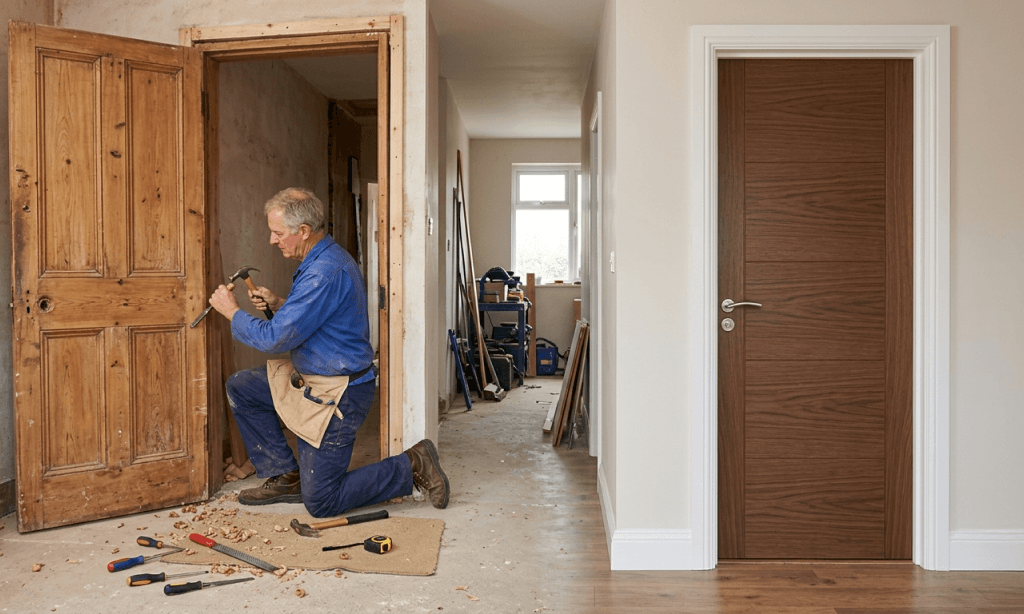
When it comes to choosing doors, one of the most common debates is in what goes better- the Teak wood door vs Engineered wood door. While teak doors are known for their long lasting durability as well as elegant visual appeal, they are relatively priced higher and require heavy maintenance. Over time, they can also develop cracks, face termite issues despite natural oils, and show signs of bulging or peeling due to moisture exposure. The engineered wood, on the other hand, is manufactured using modern door technology, is aesthetically appealing and comes with relatively better stability, and requires less maintenance, while offering resistance to common issues like warping, cracking, and surface damage making it an ideal choice as the best door material for Indian homes today.
What Is a Teak Wood Door?
A teak wood door, commonly known as “Sagwan” in India, is widely used in traditional wooden door designs for its natural strength, durability, and timeless appeal. The natural oils present in these trees are ideal for use as termite-resistant doors and are durable without compromising on their appeal with the rich finish they provide, making them popular in premium door India segments. However, in real-world Indian conditions, teak can still face surface cracks and moisture-related issues see how it stacks up in the veneer vs regular wooden door comparison for a broader perspective.
Types of Teak Used for Doors in India
Across India, one can find a variety of teak wood on the basis of quality, durability, and cost. The right type of teak wood depends on the application and the performance expected and must fit into one’s budget.
| Teak Type | Origin | Quality |
| Burma/Myanmar Teak | Myanmar (old growth) | Supreme |
| Indian Plantation Teak | Nilambur, Godavari, Dandeli | Premium |
| African Teak (Iroko) | West Africa | Good (not true teak) |
| CP Teak | Madhya Pradesh | Standard |
The variations, along with the quality of each type, clearly showcase the wide gap seen in teak door price vs engineered wood door comparisons across the market.
What Is an Engineered Wood Door?
Factory finished, engineered wood doors use engineered wood vs composite construction that includes a hardwood frame, composite core and a veneer or laminate finish. These factory-finished doors are constructed in precise, controlled environments making sure there is no compromise on precision, consistency, and durability.
H2 How Engineered Wood Doors Are Made
Engineering the doors in a factory controlled environment enhances the strength of these doors while minimising issues that are commonly faced with wood like warping, cracking and bending. It also prevents common problems seen in solid wood such as bulging, peeling finishes, and seasonal movement.
Different ways Engineered Wood Doors are made.
- Engineered wood Jamb & Architraves
- Engineered wood stile & Rail
- Engineered core infill
- HDF/HDHMR deck cover
- CPL veneer wrap
- Edge sealing
- Factory testings
This is why the teak wood door vs engineered wood door debate is shifting toward engineered solutions in cities.
H2 Teak Door Vs Engineered Wood Door — Head-to-Head Comparison
To understand the teak door vs engineered wood door India scenario, here’s a direct comparison across key factors.
| Parameter | Teak Wood Door | Engineered Wood Door |
| Material | Solid timber | Multi-layer composite |
| Aesthetics | Natural grain with variations in grain texture | Uniform designs |
| Weight | Heavy (30–60 kg) | Heavy feel but, smooth swing(25–75 kg) |
| Termite Resistance | Low | High |
| Moisture Resistance | Good | Very good |
| Warping | Possible | No warping |
| Maintenance | High | Low |
| Lifespan | 20–30 years | 30–50 years |
| Repairability | Limited | Low Maintenance |
| Consistency | Varies | Uniform |
| Lead Time | 3–8 weeks | 4–6 weeks |
| Installation | On-site | Ready-to-install |
| Eco Impact | High | Lower |
| Fire Resistance | Low | Optional |
| Sound Insulation | Moderate | Good–excellent |
By comparing teak wood doors vs engineered wood doors, one can understand well why engineered wood doors are an ideal choice. They are specifically designed to eliminate the common structural and surface issues seen in solid wood doors over time
H2 Where Teak Doors Still Make Sense
Although we know solid teak door disadvantages, this material is still relevant in certain use cases. However, these applications often require higher upkeep and careful environmental control to avoid damage over time.
| Use Case | Why Teak Works |
| Heritage homes | Authentic look |
| Carved main doors | Best for detailing |
| Long-term homes | 50+ year lifespan |
| Custom luxury projects | Unique designs |
H2 Where Engineered Wood Doors Are the Better Choice
Learning about the different engineered wood door benefits helps both homeowners and interior designers choose them for use in the right applications.
| Use Case | Why Engineered Wins |
| Apartments | Heavy feel but smooth swing, easy install |
| Multi-door homes | Uniform look |
| Humid climates | No warping |
| Kitchen/bathroom areas | Moisture resistant |
| Commercial projects | Fast execution |
| Budget homes | Lower cost |
This is why engineered doors are increasingly preferred to explore the benefits of engineered doors for entrance areas for a detailed breakdown.
H2 Maintenance Comparison — Real-World Indian Conditions
Maintenance is where the biggest difference appears in daily life.
| Maintenance Task | Teak Door | Engineered Wood Door |
| Polishing | Required yearly | Not needed |
| Termite treatment | Every 2–3 years | Not needed |
| Warping checks | Required | Not needed |
| Refinishing | Every 5–7 years | Rare |
| Hinge adjustment | Frequent | Rare |
| Cleaning | Special care | Simple wipe |
Engineered wood doors clearly reduce long-term effort and cost. Teak doors, especially in humid or coastal regions, are more prone to issues like swelling, surface cracks, and finish deterioration if not maintained regularly.
H2 Common Myths About Engineered Wood Doors — Busted
Many misconceptions still exist around engineered wood doors—here’s the reality.
| Myth | Reality |
| Cheap quality | Premium factory-built |
| Short lifespan | 30–50 years |
| Weak structure | Strong layered build |
| Artificial look | Looks like real wood |
| Break easily | Stress-resistant |
H2 The Verdict — Which Should You Choose?
Choosing the best door material for Indian homes depends on budget and usage.
| Your Situation | Choose |
| Heritage home | Either |
| Apartment | Engineered |
| Budget under ₹20,000 | Engineered |
| Premium entrance | Either |
| Humid climate | Engineered |
| Dry climate | Either |
| Commercial project | Engineered |
| Uniform design need | Engineered |
When choosing between teak wood vs engineered wood doors, teak wood is durable and visually appealing, but is expensive and requires high maintenance. They are prone to cracking, peeling of polish, and other moisture-related deformation over time. Engineered wood doors are affordable, convenient, resistant to scratches, stains, moisture, cracking, and are easy to maintain in modern homes. making it an ideal choice with long-term value, especially when considering engineered wood door price India and minimal upkeep.

