
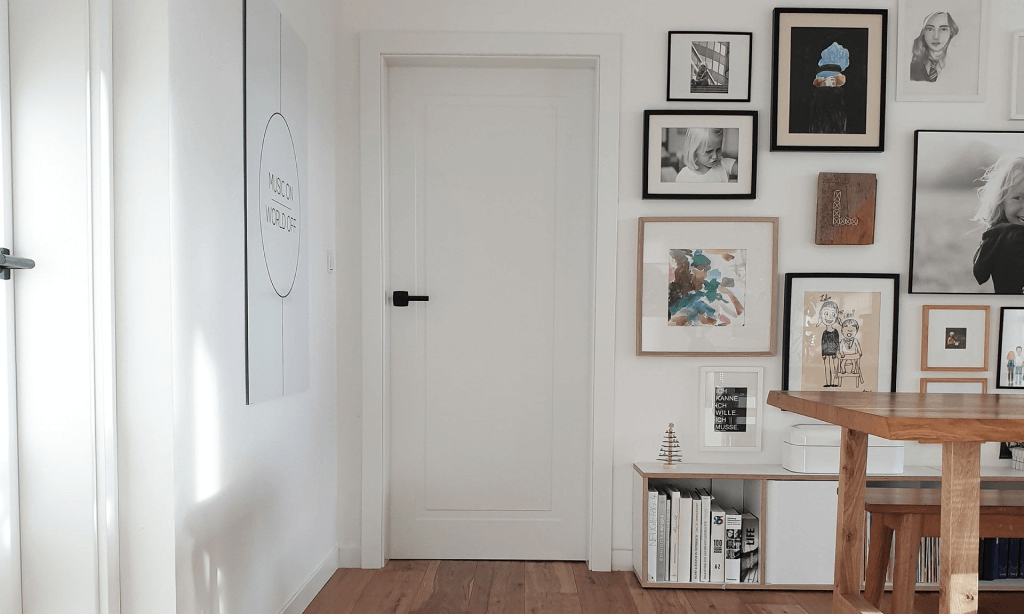
Engineered doors are doors crafted using the latest advanced technology, and reconstructed materials to manufacture doors that last for a long period of time with no compromise on visual appeal and performance. They are durable, can resist the presence of moisture, fluctuating temperature conditions, scratches and stains unlike solid wood. An engineered wood door not made from a single piece of timber, but from engineered laminated wood and reinforced cores with layered construction. This makes these doors apt for use in both residential and commercial applications where reliability is critical.
Meaning of an Engineered Door
An engineered door is made in factories using multiple layers of wood-based materials that are bonded together using strong adhesives under controlled temperature and pressure in machines with precise measurements. These layers are placed in such directions to provide internal strength and resist warping, cracking, or swelling over a period of time. An engineered door may have solid core or tubular core infill, HDF decks, aluminium sheet reinforcement, and PUR adhesive bonding that ensure dimensional stability.
Wesmarc offers premium engineered doors as a complete door system that includes shutter, frame, hardware, and sealing elements to ensure proper fitting, ease of alignment ensuring smooth operation with no compromise on performance.
Types of Engineered Door
Choosing from the right types of engineered door depends on where it is to be used, the location and performance requirements.
Solid core engineered door is one of the types that makes use of dense core material along with engineered laminated wood layers. This enhances the strength of the door and provides better acoustic performance along with impact resistance. They are ideal for use in main doors and high-traffic areas.
Tubular core type engineered door is another variant that makes use of strategically placed hollow sections that helps minimize weight without compromising on structural integrity. These doors are often used in applications requiring controlled performance and smooth handling are required.
Engineered door variants also depend on different surface finish and detailing that includes construction detailing, such as rebated profiles, PVC edge banding, factory-finished surfaces, and moisture-resistant bottom protection to use across various applications.
Benefits of Engineered Door
One of the most important benefits of engineered door is its superior dimensional stability. Crafted using several layers of wood, reinforced cores, these doors retain their shape, integrity and alignment over years to come in any weather conditions.
Factory-controlled manufacturing ensures these doors are durable as it comes with hardware, reinforced locking zones, and adjustable hinges that are integrated to balance load distribution through the door. As these doors come with frames too, there is better acoustic sealing restricting sound from passing through.
With protective coatings, these doors provide resistance to UV rays, presence of moisture around, ensuring long lasting performance given its precision manufacturing and system-based construction.
Precision Manufacturing and Installation Accuracy
Engineered doors offer one other major benefit that they come with controlled precision. Every single door is manufactured to be uniform, with equal load distribution and integrated sturdy hardware providing long term stability. Additionally, they are easy to install given their uniform thickness, edges, and accurate dimensions. This provides better alignment with frames, smoother shutter movement, with no gaps between the frame and door. Engineered doors also come with pre-defined hinge locations, reinforced hardware zones, and calibrated rebates that ensure the errors during installation are minimal, making sure the door opens and closes smoothly with no pressure or stress on hinges or locking systems. This also reduces friction, misalignment, and uneven wear that are often experienced in conventional door installations.
Choosing engineered doors is not about just visual appeal, but also how its reliability, safety, and performance consistency. Engineered wood doors that are factory made provide a dependable solution for all homes and commercial spaces making it a long lasting, sustainable solution. These doors from Wesmarc that are offered as complete systems provide desired stability, reliability and performance that other conventional doors don’t guarantee.
Frequently Asked Questions
1. How is an engineered door different from a solid wood door?
Engineered doors are manufactured using several layers of wood, reinforced cores that are bonded together using PUR adhesives under controlled temperature and pressure. On the contrary, a wooden door is made using single timber sections and is more prone to warping and cracking over a period of time.
2. Are engineered wood doors suitable for interior use?
Engineered wood doors are apt for use in interior applications given their reliability, durability, uniform thickness, lead bearing ability along with smooth operation, consistent performance and integrated hardware and frames.
3. What types of engineered doors are best for high-traffic areas?
Solid core engineered doors are ideal for use in high traffic areas that require impact resistance, robustness, and high acoustic performance.
4. Do engineered doors require special maintenance?
Engineered doors are relatively easy to maintain as they have factory-applied finishes, moisture-resistant construction, and edge protection that make them long lasting unlike conventional doors.
5. Are engineered doors a good long-term investment?
Engineered door construction includes predictable performance, reduced maintenance, and extended service life, making them a cost-effective long-term solution.

