
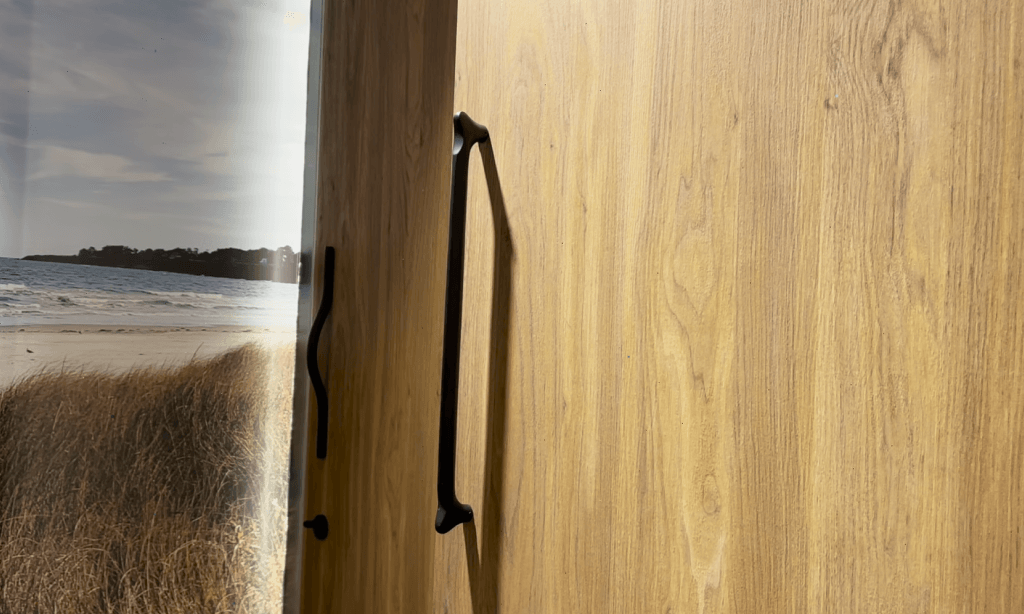
While door hardware is usually considered one of the finishing touches, the reality is that it defines how a space functions and feels. In the plethora of decisions surrounding door planning, choosing between pull and push mechanisms makes a significant difference in terms of usability, flow, and overall experience. Being able to understand how different door handle types work in real life helps to create spaces, both in a residential and commercial environment that are intuitive, efficient, and visually balanced.
Among different architectural elements used in a building, doors are those architectural components employed most frequently. The operation must be natural, easy, and reliable, especially when combined with engineered door systems, fitted frames, and factory-installed hardware. The opening direction of a door, together with the method for handling it, should be related to how the space will be used.
Understanding Pull Door Handles
A pull door handle is used when the door opens towards the user. Such handles allow for a secure grip and controlled motion making it suitable for spaces where deliberation of access and stability is important. In residences, pull handles are always preferred for main doors, bedroom doors, wardrobes, and private rooms where a sense of closure and control enhances comfort. Pull door handles are also good with heavier, well-insulated doors. When doors are acoustically sealed and engineered for durability, a pull mechanism supports smoother handling without sudden movement. This makes them ideal for rooms that require quiet operations, privacy, or repeated daily use without wear. The pull handles find their applications in cabins, meeting rooms, premium office entries, and hospitality environments. They allow for clear visualization of how the door is to be operated, eliminating confusion while making it convenient for people to move through. Along with robust door construction and factory-fitted hardware, pull handles ensure relevance in a professional setting that demands reliability.
From a design perspective, pull handles reinforce sophistication. The position and proportion reinforce the door’s architectural presence when combined with clean lines, flush frames, and coordinated finishes.
Understanding Push Door Handles
A push door handle is used for doors opening away from the user. This mechanism supports quick and effortless access, making it ideal for spaces with frequent movement. In homes, this one out of different door handle types is commonly used in the kitchen, utility rooms, balconies, and internal passageways where ease of movement is imperative.
It is in commercial and public settings that push door handle is the most effective. Push mechanisms are appropriate for offices, educational facilities, medical centres, and institutional buildings since this encourages smoother flow of traffic. In these places, a door is opened many times each day, and sometimes people have something in their hands; hence, push operation would be easier and instinctive.
Push handles also work well with modern, minimalist design approaches. Their simplicity contrasts well with modern interior designs and is fully suitable for high-frequency operation. In addition to the above technology, push handles are known to maintain orientation even with engineered doors that have adjustable frames and even in demanding environments
Selecting A Proper Handlebar
The choice between pull door handle and push handles is highly dependent on the function of the room and the orientation of the door. Pull handles are often preferred for bedrooms, entrance, and private areas for their better control and convenience. Kitchens, balconies, and transitional spaces work better with push handles that let one move faster and more easily.
Another important factor is how the handle works together with the overall door system. Precise engineering of the door, acoustic seals, and strong frames work much better when the door handle types support the way it is supposed to be used. A well-matched handle enhances comfort and increases the life of the door.
Right Handles in Commercial Establishments
Commercial arenas have requirements for clarity, efficiency, and durability. Push handles will always remain a preferred choice for use in high-traffic environments since they provide for rapid entry. A pull handle is apt for use in areas where managed entry could also become a consideration.
The proper selection of handles reduces the operational stress exerted on the doors. When the type of handle, door construction, and usage patterns match, the doors work smoothly with minimum maintenance. The integrated approach in planning bears greater importance in large-size commercial projects where uniformity and performance are crucial.
The choice between a pull and push handle is less about opting for the better option and more about choosing the one that best fits the space. Both door handle types serve different purposes, and neither one is invariably more effective than the other, and depends on door direction, frequency of use, and the kind of environment involved. A handle becomes less of an afterthought and more of a functional extension with well-thought-out designs of door systems as a complete solution embracing the structure, frame, and hardware of a door. The well-crafted design of Wesmarc Doors’ door solution encapsulates the essence of handle selection, innovation, and design in making the functionality of doors less cumbersome on a daily basis. With a well-informed perspective on the types of handles and how they can be used in practical implementations, homeowners and commercial space planners can design an intuitive space that instills a sense of reliability and harmony in design and functionality.

